Posts

Showing posts with the label cavities

Understanding Pediatric Fluoride Treatment

Image
It's undeniable that fluoride has played a major role in the decline of dental cavities in the United States.  However what isn't so clear to many parents is whether or not fluoride treatments are safe and/or beneficial for children. After all, children receive fluoride on a regular basis from many different types of foods and even water.  Through these sources alone, minerals lost due to plaque, bacteria and sugars are  remineralized on teeth. So, is an additional fluoride treatment at the dentists necessary and if so, at what age are the treatments most beneficial? Read on to find out. Why You Should Consider Fluoride Treatments For Your Child While it's true that fluoride found in foods and water can replace lost minerals, it sometimes isn't enough to strengthen teeth and protect against cavities.  In fact, if you don't consume enough natural fluoride, demineralization will occur much more quickly than remineralization, leaving enamel at risk and causin...
Children and Dental Hygiene

Image
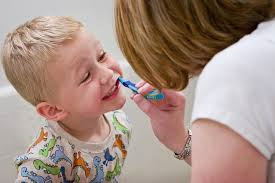
Tooth Decay As you might guess, the number-one dental problem among preschoolers is tooth decay . One out of 10 two- year-olds already have one or more cavities By age three, 28% of children have one or more cavities By age five, nearly 50% of c hildren have one or more cavities Many parents assume that cavities in baby teeth don't matter, because they'll be lost anyway. But that's not true. Dental decay in baby teeth can negatively affect permanent teeth and lead to future dental problems. Teaching Good Dental Habits The best way to protect your child's teeth is to teach him good dental habits. With the proper coaching he'll quickly adopt good oral hygiene as a part of his daily routine . However, while he may be an enthusiastic participant, he won't yet have the control or concentration to brush his teeth all by himself. You'll need to supervise and help him so that the brush removes all the plaque—the soft, sticky, bacteria-...

Before and After

Image
We had an adult female patient come in with deep decay in her tooth as shown.   Dr Louie was able to restore her tooth, eliminate the decay with only composite filling as shown here. 

Fluoride and Children

Image
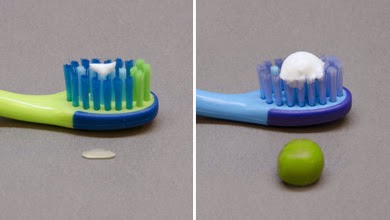
In February, the American Dental Association updated its recommendation to caregivers of young children.  The old recommendation was using water to brush the teeth of children younger than 2 years old and to brush the teeth of children 2 to 6 years old with a pea-size amount of fluoride toothpaste.  The Council on Scientific Affairs (CSA) is updating its guidance to caregivers that they should brush their children’s teeth with fluoride toothpaste as soon as the first tooth comes in.  To help prevent children’s tooth decay, the CSA recommends that caregivers use a smear of fluoride toothpaste (or an amount about the size of a grain of rice) for children younger than 3 years old and a pea-size amount of fluoride toothpaste for children 3 to 6 years old. The new guidance is intended to provide children with the full benefit of cavity protection while limiting their risk of developing fluorosis, which is a mild discoloration of teeth usually appearing as faint lines...

Prevent decay, don't delay!

Image
Did you know that 100 million Americans fail to see a dentist each year, even though regular dental examinations and good oral hygiene can prevent most dental disease?  Neglect of dental care can have serious consequences like decay,  inflammation , and loss of teeth, and an increased risk of  malnutrition .  Gum disease  has been implicated in an increased risk of cardiovascular and respiratory disease. In addition, oral examinations can be the least invasive method of diagnosing types of cancers and other diseases.  Ask Dr Louie or Dr Hwang more about this at your next visit. The uptake rate of preventative dental care increased over a ten-year period in the United States, but there remains a large disparity among ethnic groups, reports one of the largest and most comprehensive studies on the subject, published in the open-access journal   Frontiers in Public Health . Neglect of dental care can have serious consequences like decay,  inf...

New candy eats ‘bad’ bacteria in the mouth, benefitting teeth

Image
Our mouths are a delicate balance of good and bad bacteria. When we clean our teeth, the aim is to knock out cavity-causing bacteria, while allowing beneficial oral bacteria to thrive. Now, researchers have developed a sugar-free candy, which contains dead bacteria that bind to bad bacteria, potentially reducing cavities. The importance of good oral health has been emphasized by doctors for years. Poor oral health has been linked to many conditions, from  Alzheimer’s disease  to  pancreatic cancer , not to mention  cardiovascular disease . To promote better oral health, a team from the Berlin-based firm Organobalance GmbH, Germany, created a new candy, which they claim reduced levels of ‘bad’ bacteria in study subjects’ mouths. Their research was published in  Probiotics and Antimicrobial Proteins . They note that after we eat, bacteria on the surface of the teeth release acid, which can dissolve the tooth enamel, leading to...